Lileighwhite.com
  • Home
  • Videos
    • Analysis: Chamber of 32 Doors Trilogy
    • Analysis: Lamb Lies Down on Broadway series
    • Analysis: Supper's Ready (Italian sub-titles)
    • Genesis Vintage Instrument Tours
    • Analysis: Cinema Show / Tony Banks Repair >
      • Cinema Show Repair: Nick Davis fixes Tony's Rainbow Show Bobble
    • Analysis: Supper's Ready series
    • Analysis: The Musical Box LLDOB Tour
    • Lil's Blog >
      • Analysis: Tony Levin >
        • About me
        • About me
      • Theatre of the Mind - Dickens' "A Christmas Carol" Live Celebrity Re-enactment
    • Analysis: Rainbow Theatre Repairs / Genesis' Nick Davis
    • Analysis: Steve Hackett series
  • Steve Hackett Genesis Revisited Tour
  • Genesis/Hackett/Gabriel Forums
    • The Musical Box 40th Anniv. "SEBTP/Foxtrot" Live Tour 2013/2014
    • Peter Gabriel News
    • Steve Hackett News
    • Phil Collins News >
      • Peter Gabriel Tour Info
    • Genesis items
  • Steve Hackett Equipment List (Lamb-era vs. GR2 Tour-era)
  • Armando Gallo's IKWIL App
  • Lamb Pop Art: Patrick Zoller

BankSynths (Sonic Reality vs Genesis) Vintage Instrument Tour - Part 1

BankSynths (Sonic Reality vs. Genesis) Vintage Instrument Tour - Part 2

Analysis:  BankSynths (The Musical Box vs Genesis) Vintage Instrument Tour  - Part 3


Analysis:  Hackett  (The Musical Box vs Genesis) Vintage Instrument Tour


 Genesis vs. The Musical Box Vintage Instruments  ~  The List

Picture
Picture

Steve Hackett - Genesis 1974/75

Picture
 

Francois Gagnon-The Musical Box 2011/12
Picture


Hackett Original Equipment 

Gagnon Vintage Equipment & digital upgrades


AMPLIFIER: 
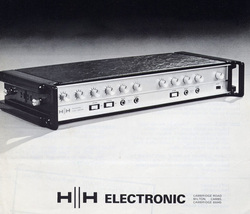
HH 100 WATT TRANSISTOR AMP, MODEL IC100 

Picture
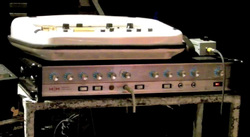
~ with electroluminescent control panel  (also used by Eddie Van Halen, Roger Waters of Pink Floyd, Marc Bolan of T Rex, Gary Green of Gentle Giant & Daniel Ash of Bauhaus).
The IC100 Organ/Musical Instrument Amplifier  gave a massive 100-watt RMS of undistorted power.  

Source/Photo courtesy:  HH Amplification Company-UK

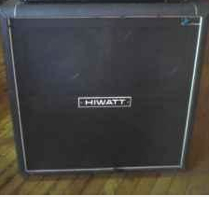
A 4x12 Hiwatt cabinet with Fane speakers.

Picture
The Hiwatt is the classic British Rock 'n' Roll Amplifier, kicked off in the late 1960s under the guidance of former Sound City guru Dave Reeves - the company gave Marshall a run for their money.   
With artists such as The Who, Moody Blues, Pink Floyd, Rolling Stones and Jethro Tull the brand was at the forefront of guitar amplification for the remainder of the 1960s and much of the 1970s..Constructed exactly like the Dave Reeves originals, with marine ply cabinets:
  • Cabinet construction with 18mm marine quality birch ply
  • Each amplifier and speaker cabinet carefully assembled and soak-tested in our own factory
  • The result is that unique Hiwatt sound, rich in 3rd and 5th harmonics, as effective in the studio as it is on stage.  Source: Hiwatt.com


Source:  Hiwatt Company - UK & Jim Kleban~ Lamb Laid Down on Midi project / lldom.blogspot.com

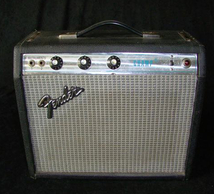
Fender Champ Amp

(In the studio, Steve also used a stock 1970'S FENDER CHAMP AMP for certain sections.
The Fender Champ is a small amplifier with low wattage and very small speakers.)   Source:  Jim Kleban
Picture

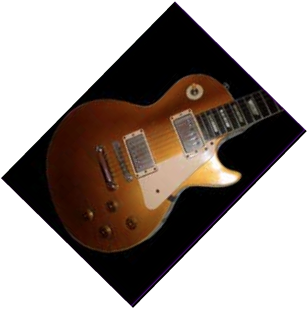
Electric Guitar:  1957 Gold Top Les Paul
                                      (Gibson)

Picture


From Hackettsongs.com
Photo: Jo Lehmann

Nylon Acoustic Guitar: Yairi Alverez

Picture
~ Japanese make, 1973


From Hackettsongs.com
photo courtesy: Mark Bourdillon


FX Equipment:


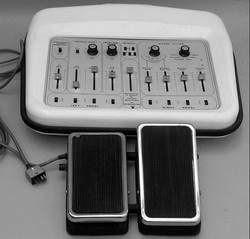
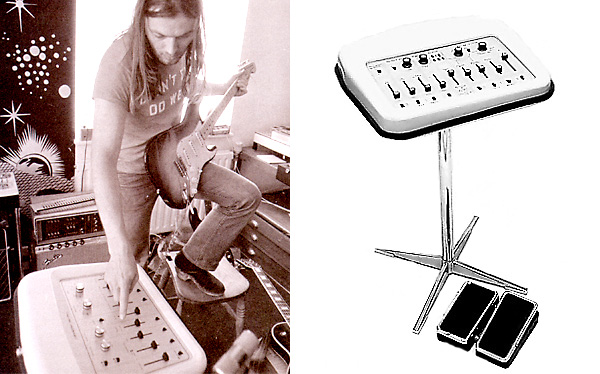
EMS Synthi HiFli

Picture
SYNTHI HI FLI: 
This was the first multi-effects unit ever produced and only a handful of these were ever manufactured.  The Hi-Fli is one of the most sought-after vintage effects designs by collectors..going for as high as $6,000+ on EBay.
A few other classic guitar heroes, besides Steve Hackett, utilized this FX unit - including  David Gilmore of Pink Floyd (Dark Side) and Richie Blackmore of Deep Purple.


The Hi Fli  was designed by David Cockerell in 1971 for EMS. He later went on to design many of the classic Electro Harmonix effects (both the Micro Synth and Small Stone phaser are inspired by the Hi Fli). Only 350 were made making it a collector’s gem.  David Gilmour bought a prototype in 1972 and from what he recalls it was “very, very expensive”.

The Hi Fli was actually referred to as a synthesizer in the original ad, but it’s basically an analog multi-effect processor, which could be used on vocals, guitars and organs.  It had two footpedals, which could be routed as control voltages/expression pedal to any of the slider functions. As with most analog equipment, at the time - it offered no memory to bank up settings– everything was in real time, so one had to manually tweak the sliders for each tone change.

Top Boost: Provides up to 30 db treble boost.

Octave Shift: Drops the pitch by an octave.

Buzz Switch: Adds high frequencies overtones to the sub-octave signal.

Ring Mod: Produce an octave higher when a signle note is played and the typical ring modulation when two or more strings are played.

Decay Rate: A rotary control controls the decay time of the ring mod and octave shift signal level.

Sustain Fuzz: Special circuits detect the beginning and end of each note and apply upper harmonics.

Attack Rate: A rotary control varies the rise time of Sustained Fuzz signal. Notes can be sustained even though the original signal has dropped by more than 20db.

Pedal Switches: The switches under the sliders combine the pedal control with the manual sliders. Selections of switches with pre-set slider positions enable the pedal to change treatments instantly.

Solo/Strum: This switch alters the Hi-Fli’s sensitivity to signal attacks and should be set to more sensitive for single notes (i.e solo).

Bypass Mix Fader: This central slider controls the mix of the original and treated sound. In the high position only the input pre-amplifier is in-circuit. The bypass footswitch gives instant access to this position. The output from the Octave shitft, Ring Modulator and Fuzz Sustain sections are re-combined and go to the phase filter and modulator section.

Control Modulation Selector: 6 position control knob.

Treatment Selector: There are six distinct modes of operation – Vibrato, two modes of Phasing, normal WAA-WAA (1 resonant peak), WAW-WAW (six resonant peaks) a completely new sound, and finally MEOW (two sets of three resonant peaks moving in oppisite directions.

Modulation Speed: This slider operates in the first 4 positions of the control modulation selector, providing a fine frequency control.
Modulation Ramp Time: Operates in positions 3 to 6 of the conrol modulation selector.

Modulation Depth: Controls the depth of the Phaser.

Frequency shift: This controls the frequency domain in which the modulation waveform operates, being central for symmetrical modulation.

L.E.D selectors: Two light emitting diodes show the movement of the modulation waveform.

The only usage on the album of the "Lamb Lies Down on Broadway" one can clearly identify the use of the Hi-Fli is Steve's unique & comical vibrato solo in "Counting Out TIme".
Some believe the Synthi Hi-Fli could have been used on a few other tracks in the mobile studio recording of The Lamb, for the Vibrato sounds within the Title track and "Back in NYC". 
(Sources:  ems-synthi.demon.co.uk, “AnalogMan’s Guide to Vintage Effects” by Tom Hughes and Jim Kleban/Lamb Laid Down on Midi / lldom.blogspot.com)


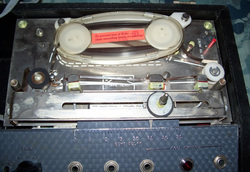
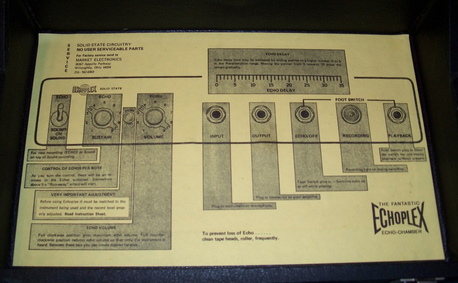
Echoplex EP-3 Solid-State Tape Echo Unit

Picture
Beginning in the 1970s, the solid-state Echoplex was offered by Maestro and designated the EP-3. This unit offered echo, sound-on-sound, and a number of little convenience tweaks. Having been produced from 1970 to 1991, this unit enjoyed the longest production run of all the Echoplex models. Right about the time of the public introduction of the EP-3, Maestro was taken over by Norlin industries, then the parent company to Gibson Guitars.
In the mid-1970s Market created an upgrade to the EP-3, designated the EP-4, adding features such as an LED input meter and tone controls and dropping the sound-on-sound feature. The EP-4 added output buffer to help improve impedance interfacing with other equipment. A compressor board based on the CA3080 Transconductance Amplifier was added to the record circuit of both the EP-3 and EP-4 models for a short while after the EP-4 model was introduced and then the compressor board was dropped from both the EP-3 and EP-4 models. The EP-3 model was also offered for sale alongside the EP-4 model after the EP-4 was introduced.  (source: Wikipedia)


Picture


GUITAR FX PEDAL BOARD

Picture


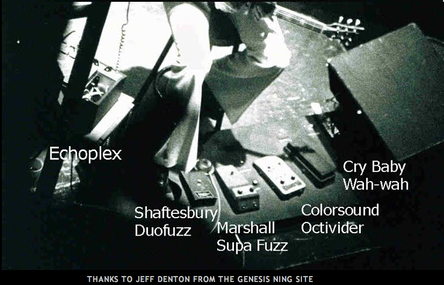
Visual label information, courtesy:  Jeff Denton / GrandParadeProg.com

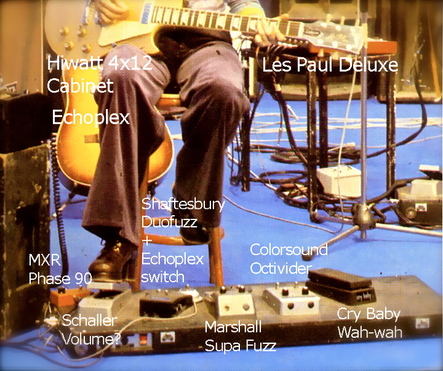
Steve used a custom pedal board built by Pete Cornish, which included:

Picture
Visual label Information courtesy:  Jeff Denton / GrandParadeProg.com


A COLORSOUND OCTIVIDER,

A SCHALLER or COLORSOUND VOLUME PEDAL,

A MXR 90 PHASE SHIFTER,  

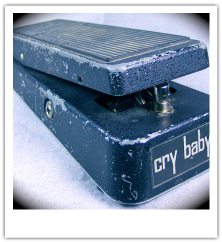
A CRY BABY WAH WAH PEDAL

Picture

Fuzz Boxes 

Picture

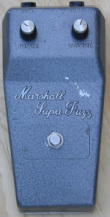
MARSHALL SUPA FUZZ  


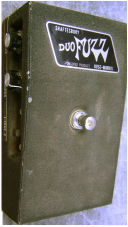
SHAFTESBURY DUO FUZZ 
(MANUFACTURED IN JAPAN BY AN OEM AND SOLD IN THE UK AS SHAFTESBURY).

Picture

Reverbs:


HH Electronics IC 100 amplifier was capable of adding normal & bright input on its 2 channels along with Vibrato, Reverb, a Sustain (gain boost) switch.

Reportedly, additional reverb was added at the Island Studio mix-down session.
Genesis used several EMT 140 plates and while mixing, all of the instruments were to one of these board-routed reverb busses.
In essence, Steve's guitar work shared the reverb of other instruments during mix-down.  (add'l info: Jim Kleban~ Lamb Laid Down on Midi project / lldom.blogspot.com)

AMPLIFIER:   
HH 100 WATT TRANSISTOR AMP, MODEL IC100

Picture
The HH IC100 Amp that The Musical Box currently utilizes was actually taken out of a combo amp (one cabinet with head and speakers).  
* A collector bought the handles from the people who own the HH brand today, and then his friend custom-made the top and bottom panels so it could be used as a head rather than inside the combo.
The HH IC 100  was popular in the early to mid-70s because it was loud and cheap.  It had a circuit to make it sound dirty (distorted) which you could use by playing into it loud.  If you turned the volume on your instrument down, it would sound clean.  It also had a pretty good built-in distortion called sustain and it had a very good built in reverb.  
* (TMB's HH IC100 amp is on loan from dedicated Genesis fan  - who offered it when The Musical Box was staging the 2004 production of the LLDOB - knowing that it was a key piece in the Hackett arsenal of guitar Wizardry )


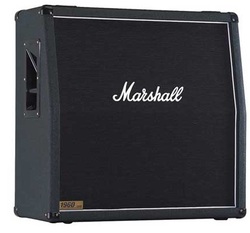
Marshall Speaker Cabinet

Picture
Gagnon uses a Marshall as his Main guitar sound - mic'd and sent to the house mixer (..as well, as his on-stage monitor - located under the riser, directly in back of him) during the performance of The Musical Box's "Lamb Lies Down on Broadway".


Photo courtesy:  MarshallAmps.com


Electric Guitar
:
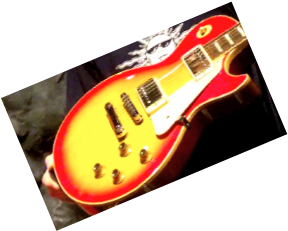
 1977  Les Paul Standard
                                          (Gibson)

Picture
*Seymour Duncan pickups
     added, post-production


Courtesy: Francois Gagnon


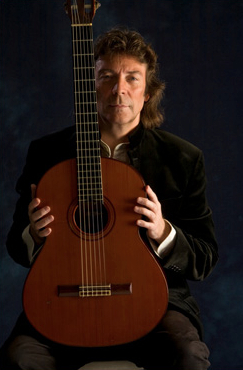
Nylon Acoustic Guitar:
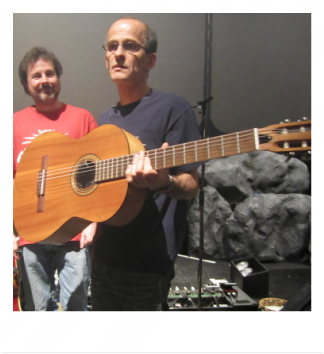
 Kamouraska

Picture
Canadian (Quebec) make, 


Courtesy: F. Gagnon


FX Equipment:  


EMS Synthi HiFli

Picture
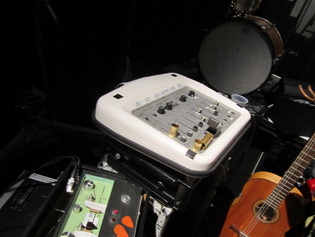
In 2004, after searching the vintage-effects market with great resolve - 
The Musical Box's Sebastien Lamothe and Serge Morrissette landed one of the rare, remaining Synthi HiFli's on the open market.  
It remains the crown jewel of the Genesis Vintage Instrument collection The Musical Box uses for its superlative, live concert re-creations. A new generation of Synthi HiFli's is now being produced, in the United Kingdom, for approx.  2000 UK Pounds:  http://www.synthi.co.uk/hifli.html  


As "Analog" Mike Piera (AnalogMan.com) stated in our "Analysis: TMB Vintage Instrument Tour" video - TMB's  particular unit bears the name of Musonic, Inc. on its faceplate, as well as EMS.

Although manufactured by the British electronics concern -  EMS,  
an American company named Musonic, Inc ( based in Chicago, Illinois) distributed all of EMS's equipment in the U.S, in the early 1970's.

Musonic, Inc. - a short history  (source:  Jack Beerman) :

At one time Musonic distributed Acoustic amplifiers and sold equipment directly to Ike Turner of Ike and Tina Turner.  
The company also distributed all of EMS's equipment including the Synthi Hi Fli and their keyboard synthesizers (some of which came in a suitcase and had touch keyboards without any actual keys).   They were considered very complex, at the time. 

Synthesizers in those days (1970s) were monophonic-- a keyboardist could only play one note at a time, which was why the Mellotron was important in its time period.

The reigning musicians of that day invested in the Mellotron, because of this (including Mike Pinder/Moody Blues, Ian McDonald/King Crimson,  Edgar Froese/Tangerine Dream, Rick Wakeman/Yes, Tony Banks/Genesis, John Lennon & Paul McCartney/Beatles) - because is was the first which could play multiple notes, at the same time.  

Musonic also distributed HH amplifiers and Orange Amplifiers  (that was after they stopped with Acoustic) and they also distributed Colorsound pedals in the US. 

Musonic designed, manufactured & marketed its own proprietary pedals, in the company's home offices/warehouse.   
For a short while, Musonic operated a retail store in Skokie, IL and/or Lincolnwood, IL - where they sold lighting and p.a. equipment for disk jockeys and discos.  


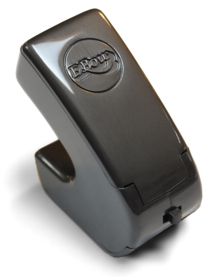
E-Bow  ~ Electronic / Energy Bow

Picture
The EBow or ebow (brand name for "Electronic Bow" or Energy Bow)  is a hand-held, battery-powered electronic device for playing the electric guitar, invented by Greg Heet in 1969.
Instead of having the strings hit by the fingers or a pick, they are moved by the electromagnetic field created by the device, producing a sound reminiscent of using a bow on the strings.
The EBow is used to produce a variety of sounds not usually playable on an electric guitar. These sounds are created by a string driver which gets its input signal by an internal pickup which works like a guitar pickup. Its output signal is amplified and drives the other coil which amplifies the string vibrations. With this feedback loop the player can create a reminiscent string vibration.
By varying the EBow's linear position on the string, the user can change the sound due to the changing string harmonic along different positions of a vibrating string.  
Essentially, the EBow replaces the pick in the right hand letting the guitarist mimic strings, horns, and woodwinds with unbelievable sensitivity. The EBow produces a powerful infinite sustain, rich in harmonics for incredible guitar sounds. Unlike plug-in effects, the Energy Bow does its work on the string itself... Direct String Synthesis™.     Infinite Sustain is just the beginning.
Many different artists have used the EBow in a wide variety of musical styles. 

One of the first notable users was Genesis guitarist Steve Hackett, who used the device on future live performances of "The Carpet Crawlers" (from the band's 1974 album The Lamb Lies Down on Broadway).  (Source: Wikipedia, www.ebow.com)


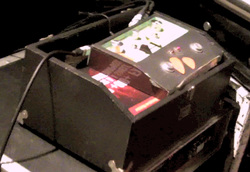
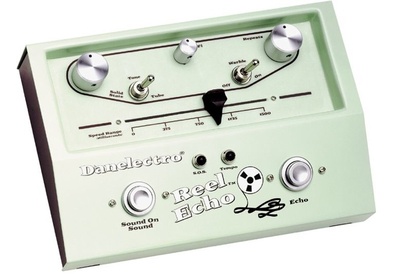
Echoplex (Danelectro DTE 1 Reel Echo

                                        Tape Simulator)

Picture
While TMB's malfunctioning, original Echoplex  is restored (or Analog Mike Piera finds them a new one to use)...
Gagnon uses a digital reproduction simulator manufactured by Danelectro - called the "Reel Echo Tape Simulator".
The Danelectro Reel Echo Tape Simulator Pedal reproduces the output of those vintage tape echo units (and, the sales pitch says  "it will hold up a lot longer than they will").   The Reel Echo from Dano supposedly "simulates the sound perfectly and adds a Warble switch to replicate tape pitch deviations".
 "A lo-fi control rolls off high frequencies of successive repeats just like tape while a Tube/Solid State toggle lets you pick your vintage. The Sound on Sound button works just like the original so you can play over the lick you just recorded. The Danelectro Reel Echo gives you up to 1-1/2 seconds of delay."
(Delay is one of the simplest effects out there and one of the most valuable. A little delay can bring life to dull mixes, widen your instrument's sound, and even allow you to solo over yourself. Delay is the also a cornerstone of other effects, such as reverb, chorus, and flanging.Delay is created by taking an audio signal and playing it back after the delay time. The delay time can range from several milliseconds to several seconds. Most delays have a control that allows you to repeat the sound over and over & it becomes quieter each time it plays back).

Source/Photo courtesy:  Danelectro.com

Picture

GUITAR FX PEDAL BOARD

Picture
 

Photo courtesy:  Francois Gagnon

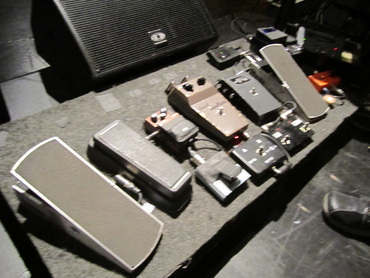
Francois uses his own custom-built pedal board, which includes hand-crafted replica pedals of his own making, based on original schematics.

Picture
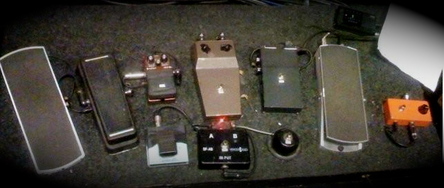
Here is Gagnon's pedalboard on stage, with his handmade SUPA FUZZ replica in the middle, with the Shaftsbury Duo Fuzz (same as Univox SUPERFUZZ) on it's right. Note the LED mounted through the bottom plate of the SUPA FUZZ so as not to require drilling holes in the carefully made casing. 
The Ernie Ball volume pedal on the right is BEFORE the fuzzes, and used for the violin swells. It works great for that as it adds the fuzz and sustain as you push it down, driving the fuzz pedals harder. The volume pedal on the left is for his level.  
(Source/Photo courtesy: Mike Piera / AnalogMan.com)

DANELECTRO DTE-1 REEL ECHO TAPE SIMULATOR 


BOSS GRAPHIC EQUALIZER  w/Magic Mushroom activator 

VOX / CRYBABY  WAH WAH PEDAL

ERNIE BALL VOLUME PEDAL

OCTAVE PEDAL (which takes single notes & phrases, but not chords and 
                                                                      lowers them by one octave)
MXR PHASE 90  PHASE PEDAL

"MARSHALL SUPAFUZZ" PEDAL *(Replica 3-transistor germanium fuzz pedal , hand-made by Francois Gagnon, similar to Tone Bender MK-II) 

BASS EQ PEDAL

SILICON FUZZ PEDAL  *(Hand-made by Francois Gagnon, duplicating the exact schematic design of Steve Hackett's Shaftesbury Duo-Fuzz)

Picture

Gagnon's "Shaftesbury" Fuzz Box replica

Picture
François built the chassis out of an aluminum Pizza pan! He bent the metal himself and soldered it up, using some body filler to hide some screws and metal connections.
*Side-by-side visual comparison 
of Mike's vintage Univox Super Fuzz and Francois' exact replica.
Photos courtesy of
Mike Piera / AnalogMan.com


My sincerest thanks....

Picture

This series could not have been accomplished w/o the help/extreme efforts of Sebastien Lamothe, Francois Gagnon, Analog Mike Piera, Steve Hackett, Tom Lord-Alge, Sylvia Tosun & Scott Weinberger.

Additional thanks go to:  Jack Beerman, Paul Davis, Jeff Denton, Jim Kleban, Paul Sladek, Dr. Kevin Holm-Hudson and Sean Lasaril for their contribution of invaluable knowledge, all things "historic" with the Gabriel/Hackett years of early Genesis.  xoxo Lil


Analysis: Chamber of 32 Doors - Part 1
YouTube: http://youtu.be/wUYoeUeg-r8


Analysis:  Chamber of 32 Doors - Part 2
YouTube:  http://youtu.be/eJfgDEE8BQI


Analysis:  Chamber of 32 Doors -Part 3
YouTube:  http://youtu.be/piueJ_0N-Kk


Analysis: Tom Lord-Alge & the Chamber of 32 Doors  (alternate version of Part 1/Tom's intro)
YouTube:    http://youtu.be/CMOmxytrP5s


http://www.lileighwhite.com/ 
*FOR SERIOUS LAMB FANATICS ONLY !!!* 

A
n Analysis of the many allegorical layers, written by Peter Gabriel, within the pivotal song "The Chamber of 32 Doors" on the original Lamb Lies Down on Broadway album.

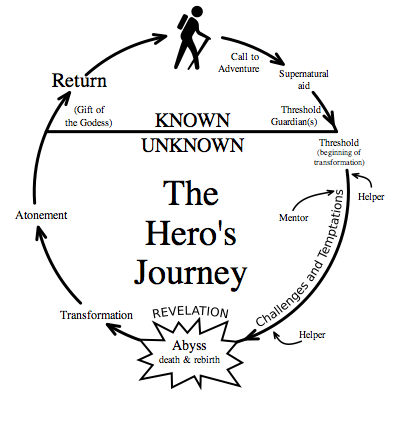
Jungian Archetype Theory, The Power of Myth's Hero's Journey and the Tibetan Book of the Dead provide the framework with which Gabriel wrote of his pending decision to leave Genesis.
Add onto that the visual work of "El Topo" director Alejandro Jodorowsky, as Peter's inspiration - and you have one, very serious surrealistic work of art.

WARNING/ADVISORY:   This trilogy of videos are DEEP (because these metaphysical/psychoanalytical works were what Peter Gabriel had been reading up until the uber-rushed writing of The Lamb)!
Although, he claims the lyrics are flawed - many still consider it a layered work of genius.
Part Surrealism, Part Metaphysical, Part Self Psychoanalytical. 

These videos are the result of 2 years of intense research and many contributions by many people (several, quite close to Peter Gabriel & Genesis).

As Tony Robinson wrote for the 1970-1975 Genesis Box Set: "It's a mistake to think of the narrative as only having one meaning because every listener must create their own personal story."
This trilogy's analysis is not set in concrete.  It is meant to elucidate upon the metaphysical texts by which Peter was reaching to obtain his own new pathway (out of the band and into his own solo career, away from "Genesis-the-Big")....as well as start new discussions as to what the album meant to YOU, the listener.
From all of us who collaborated on these videos....ENJOY!!
Picture
Picture
Picture
Picture
Picture
Analysis series for the dedicated Genesis fan